
Will customers pay for this?
The question sector experts ask when going digital
7/10/20265 min read
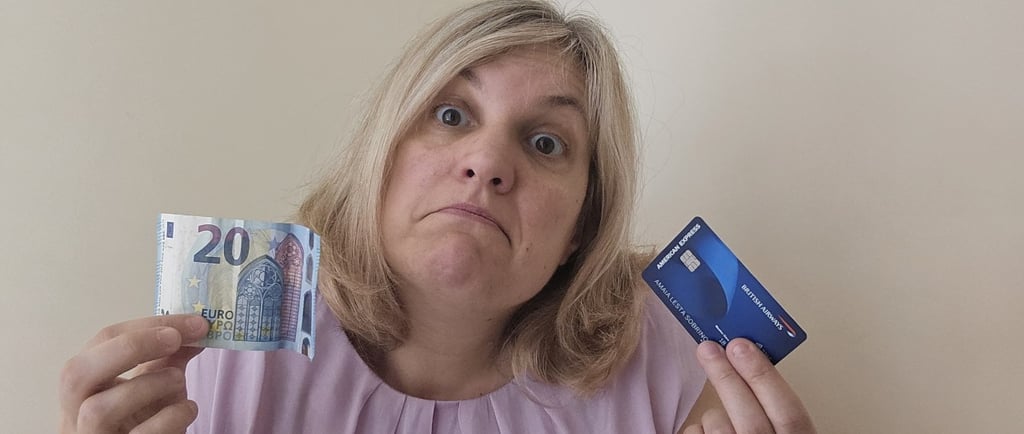

Will people pay for this? And how much will they pay?
In the last 7 days I have had this exact conversation with 5 different founders.
They are not tech founders. They are sector experts. People who know their market deeply after years of working in it, and who want to bring that expertise into a digital product or platform. Something that lets their customers interact with them digitally, makes admin easier, makes decisions easier.
They know the problem is real. They know their customers. The question that stops them is often the same. Will people pay for this? And how much?
This week, two of those founders showed me two very different ways of looking for the answer.
Founder one: the secret shopper
"Amaia, today I launched a new app."
He had big plans for it. Integrations. Many features. A long roadmap. He launched with one simple thing instead. An app to see who is attending an event before you go, plan who you want to meet, and stay in contact afterwards. You scan a QR code and search the list of attendees. That was all.
Then he did something clever. He went to an event, handed the app to real users, mixed with them, and said nothing about being the person who built it. He watched. And he asked concrete questions:
"Show me how you use it." "What do you like about this?" "Why do you say you will use it again?"
By the end of the day he knew what people liked. He knew what they wanted next. And he knew they would use it again at a certain price.
From there, he could make real decisions about what to build next.
Founder two: the demo
Another founder built a prototype full of features and shared it with a user. "Here is my prototype." Then she ran a demo. This does this. That does that. At the end: "what do you think?"
There is nothing wrong with demoing. She is doing the best she knows, and the instinct to show your work to users is the right one. Other ways are simply more powerful.
Two things were missing here. The prototype had too much in it. And the exchange had no intention behind it. "What do you think?" is not enough. You need to know what you are testing, and you need clear questions designed to test exactly that.
Think of how Netflix tests a strategy to retain users. They change one thing on the landing page and run a test around that one change. They do not show you the whole platform and ask "this is Netflix, what do you think?"
I have lived this myself. In agile squads, we ran demos that were a show and tell. Users had no questions. Everything was well. Then they started using the product, or tried to, and that is when the real feedback arrived. Problems we then had to fix urgently, changes that were important, all discovered after the work was done.
Imagine you open a mountain equipment shop. You bring in your ideal customer and ask "what do you think?"
Now imagine asking instead: "what do you need to buy for your next trip to the mountains? Find it in the shop."
Then you walk with them. You see if they get lost. Where they look. Where they stop at things they were not looking for.
Same shop. Completely different learning.
The prototype is the easy part now
With AI, you can have a prototype in days, without being technical. Building is no longer the hard part. Designing how you test is the work.
And there is a trap in the question itself. If you ask a customer "would you pay for this?", they will often say yes to be kind. Stated intention is weak evidence. People rarely tell you the truth in a hypothetical situation. Even less when they know you and want to stay on good terms with you.
So the real skill is testing buying intention in a way that gives you stronger evidence.
Approaches you can use to test buying intention, at a given price
If you are asking "will people pay X for this?", you are in a better place than you might think.
It means you have an idea that solves a problem for an ideal customer. Maybe you even have a solution in your head. And you know exactly what information you need to make the next big decision. Not "do they like this feature?" Not "do they prefer X or Y?" You need to know if they will pay, and how much.
This is where I see two common mistakes.
The first: Thinking you need to spend months and serious money building the real product before you can find out if anyone will pay. In less than a week you can already have powerful insights running a design sprint.
The second: building a prototype before the real product (yeah! this is the right move!) and then having no validation strategy. The prototype exists. How to test it to provide you with the insights that matter now does not.
This last part, defining how to test with users makes the difference. Knowing which approach to use, and preparing the conversations so they give you real insights to decide your next step.
In "Testing Business Ideas", David J. Bland and Alex Osterwalder Alexander Osterwalder describe experiments that help getting the strong insights you need to understand buying intention. These are some you can adapt, and as a sector expert you have an advantage a tech startup does not: you already have customers and a network to test with.
Single Feature MVP. Launch with one feature only and observe real usage. This is what the secret shopper founder did.
Buy a Feature. Give users credit, real or fake, and invite them to spend it on the features they value most. What they buy tells you more than what they say.
Feature Stub. Add a button for a feature that does not exist yet and measure how many people click it before telling them it is coming soon.
Presales. Offer the product for purchase before it is fully built. A payment, or a deposit, is the strongest signal of intent. Your existing customers are the natural place to start.
Mock Sale. Present the product with a price and a buy button, and measure who goes through the purchase flow, without charging.
And practice running the conversations around these tests, "The Mom Test" by Rob Fitzpatrick shows how to ask questions so people give you honest answers instead of polite ones. Essential when the people you are testing with already know you.
Bottom line
The question is common. Will people pay, and how much. The prototype is quick now, thanks to AI. The missing piece is designing the test approach with real users intentionally to get the strong insights you need to get that question answers. A method to test buying intention on purpose. And mechanisms that give you stronger evidence than simply asking.
Because people will rarely tell you the truth about a hypothetical. They will show you the truth when you ask them to act.
If you are a sector expert turning your knowledge into a digital product or platform and have no time to read those books and developed those testing skills by yourself, I can help, message me.
Book a 30-minute call to turn your AI and digital product ideas into a clear next step and validate it in days. https://tidycal.com/amaialesta/
Greater impact, better results, healthier teams in tech-driven organisations
amaia@amaialesta.com
© 2026. All rights reserved.