Team Purpose: From Inspiration to Everyday Decision Tool
The hidden cost of misalignment, and what the research says about fixing it
12/9/20256 min read


During a visit to NASA in 1962, President Kennedy asked a janitor what he was doing.
"I'm helping put a man on the moon."
He wasn't designing spacecraft. He was mopping floors. But he understood exactly how his work contributed to NASA's mission. His purpose, his team's purpose, and the organisation's purpose were aligned.
That alignment is what creates focus, coherence, and meaning across a system. And in tech organisations today, it's rarer than most leaders realise.
The Alignment Test Most Teams Fail
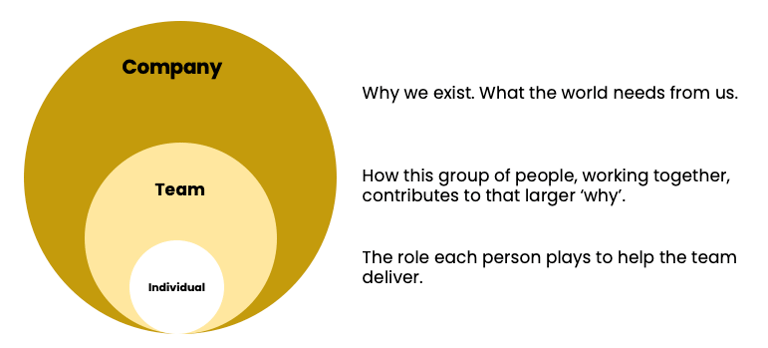
Most organisations have a purpose statement on the wall. Many individuals have personal motivations for coming to work. But there's a layer missing in between: the team purpose.
Company purpose answers: "Why do we exist? What does the world need from us?" Individual purpose answers: "What role do I play to help the team deliver?" But team purpose rarely gets articulated. It's assumed. And assumptions create drift.
Imagine asking every person in your team the same question:
What is our team here to do, and how does that link to the bigger picture?
If you receive identical answers, the team is aligned, directing energy in the same direction. If you receive different answers, fragmentation is already in motion. This is why corporate mission statements don't translate to daily work. There's a gap between what the organisation says it stands for and what any given team does on a Tuesday afternoon. Team purpose bridges that gap.
Tech environments amplify this problem. Complexity, interdependence, and constant change mean that teams without a shared purpose often work hard, but not always in the same direction. The symptoms are familiar: confusion over priorities, duplicated effort, misaligned decisions, and unnecessary friction with stakeholders.
What the Research Actually Shows
It's tempting to dismiss "purpose" as soft stuff, the kind of conversation that can wait until after the sprint. But a growing body of evidence tells a different story: teams with clear, shared purpose consistently outperform those without one, and the impact shows up in hard metrics.
Google's Project Aristotle
Google's two-year study of 180 teams found that what mattered most wasn't who was on the team, but how they worked together. Among the five key factors, "meaning" and "impact" stood out: teams that believed their work mattered, and could see the difference they made, performed significantly better.
Gallup: The 5.6× Multiplier
Gallup's 2025 research found that employees with a strong sense of purpose are 5.6 times more likely to be engaged. Only 13% report frequent burnout (vs. 38% without purpose), and they're far less likely to be job-hunting. Given that managers account for 70% of engagement variance, leaders who invest in purpose directly influence retention and productivity.
McKinsey: 30% Efficiency Gains
McKinsey's research shows that purpose-aligned team strategies achieve up to 30% efficiency gains. Team health factors, including purpose clarity, explain 69–76% of the variance between low and high-performing teams.
MIT Sloan: Why Purpose Fails to Land
MIT Sloan's research explains why corporate purpose often doesn't translate into commitment: team leaders struggle to bridge strategic vision with daily operations. The solution? Regular dialogue about purpose, equitable relationships, and autonomy. Purpose must come "off the wall and into daily decision-making."
Why Most "Purpose Exercises" Don't Work
Many leaders try to define team purpose with good intentions, but the methods they choose often make alignment harder, not easier.
Some write the purpose themselves and present it as a finished statement. Others ask everyone to draft their own version, then spend the meeting debating whose wording is best. Both approaches create attachment to individual sentences, competition between perspectives, and ultimately no shared understanding of the value the team exists to create.
The result is frustration. Or worse: a statement on a slide that nobody uses in day to day operations.
What Actually Works: The Collective Build
The most effective approach I've seen shifts focus from individual authorship to co-created meaning. Every person contributes, no one loses face, and the purpose emerges through shared insight rather than debate.
The process is simple get every team member in a room, in person or virtual:
Step 1. Individual rapid writing (3–5 minutes). Ask each team member to write a complete purpose sentence using the template:
As a team:
We serve… (Who the team directly supports)
To enable them to… (The capability or outcome this supports create)
In service of (stakeholder)… (Key stakeholders that depend on this outcome and ultimately benefit from this work)
For whom they create the benefit of… (The end impact on the broader system)
And here the magic touch that changes everything: Tell them they have five minutes, then stop the activity at the three minute mark. This timing is deliberate. People do not get attached to their individual sentence. They only generate raw material for the group. Everyone starts from the same structure, which keeps the process focused and reduces debate about format.
Step 2. The Collective Build
After three minutes, invite the quietest member of the team to read their sentence first.
Write their version on a whiteboard or shared screen.
Then invite the next team member to add or modify part of that sentence to improve it.
Continue around the group, each person building on what already exists rather than presenting their own separate version.
The sentence gradually evolves as contributions accumulate. The team co-creates meaning, one small adjustment at a time. No one defends their first draft and no one’s version dominates. The facilitator holds the flow and ensures all voices are heard.
Stop when the team feels the sentence is “good enough for now”. The aim is not perfection. It is shared ownership and clarity.
An example of team purpose could be:
As the Data & Insights Team in a HealthTech
We serve clinicians, product managers, and researchers
To enable them to make evidence-based decisions faster,
In service of patients navigating critical health decisions,
For whom they create the benefit of safer, more personalised care.
Step 3. Put the purpose into practice
Once the team has a good enough statement:
Use it to make decisions. Test it in real situations. When choosing between options, ask which one aligns with the purpose. The purpose becomes a practical decision tool instead of a poster.
Socialise it with key stakeholders. Share the sentence with two or three people who depend on the team. Ask what matches their expectations, what they would adjust and what they most need from the team now. This makes the purpose stronger and externally aligned. This can be done by team members to continue that collective build and embodiment of the purpose.
Keep it up to date. Review the purpose whenever changes in context or stakeholders require a shift. Purpose is not static. It evolves as the system around the team evolves.
Outcome
This simple three-step Collective Build creates a purpose that the whole team understands, feels connected to and can use daily. It aligns decisions, reduces confusion and gives the team a shared identity rooted in real value for their stakeholders.
Purpose as a Decision-Making Tool
Purpose is often misunderstood as a motivational poster. In practice, it's a decision-alignment tool. It answers three questions:
Why do we exist as a team?
Who do we serve?
What value do they need from us?
When the team shares the same answers, decisions get faster. Should we start this or wait? Should we focus here or there? Is this request aligned with what we're trying to achieve? Purpose removes noise. It helps teams say yes, and no, for the right reasons.
What Changes When Teams Get This Right
When a team has a shared purpose that everyone understands and uses daily:
Decisions become easier
Priorities become clearer
Stakeholder conversations become more honest
Meetings get shorter and more focused
People feel more grounded, because they know why their work matters.
The Bottom Line
Purpose isn't abstract philosophy, it's operational infrastructure. For tech teams where autonomy, innovation, and retention matter, a clear team purpose serves as the connective tissue between individual effort and organisational outcomes.
The question isn't whether to invest in team purpose. It's how to do it in a way that actually sticks.
———
About the author: I facilitate team development for tech-driven organisations, helping teams clarify purpose, strengthen connection, and build ways of working that actually work. If your team is working hard but not always in the same direction, I'd welcome a conversation.
Greater impact, better results, healthier teams in tech-driven organisations
amaia@amaialesta.com
© 2026. All rights reserved.